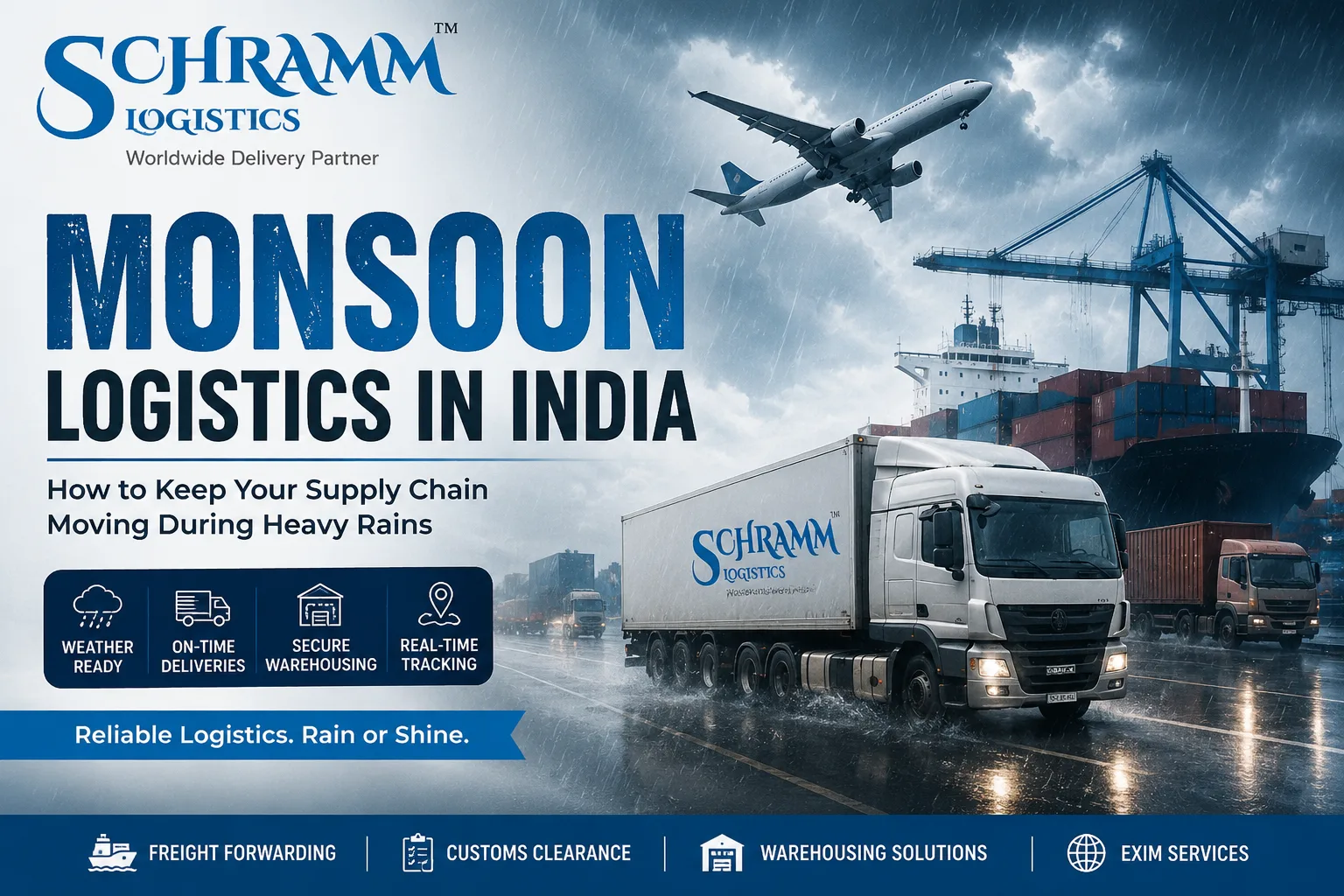
Monsoon Logistics in India: How to Keep Your Supply Chain Moving During Heavy Rains
Every year, the Indian monsoon brings much-needed relief to farmlands, reservoirs, and city temperatures. But for businesses that depend on the smooth movement of goods, the monsoon season also brings a familiar set of challenges — waterlogged highways, delayed shipments, port congestion, and unpredictable last-mile delivery times. For any company operating a supply chain in India, understanding Monsoon Logistics in India is not optional; it's essential to protecting revenue, customer trust, and operational continuity.
At Schramm Logistics, we've spent years building resilient transportation networks that can absorb the shocks of India's monsoon season without passing that disruption on to our clients. In this article, we break down why Monsoon Logistics in India is uniquely challenging, and the practical strategies businesses can use — many of which we implement daily — to keep supply chains moving even when the skies open up.
Why Monsoon Logistics in India Is a Unique Challenge
India's monsoon season, typically running from June through September, is not a uniform event. It varies drastically by region — the Western Ghats and Northeast see extremely heavy rainfall, while parts of Rajasthan and the Deccan Plateau receive comparatively less. This regional unevenness makes Monsoon Logistics in India particularly complex because a single national supply chain may need to account for flooding in Mumbai, landslides in the Himalayan foothills, and cyclonic disruptions along the eastern coastline — all within the same shipping cycle.
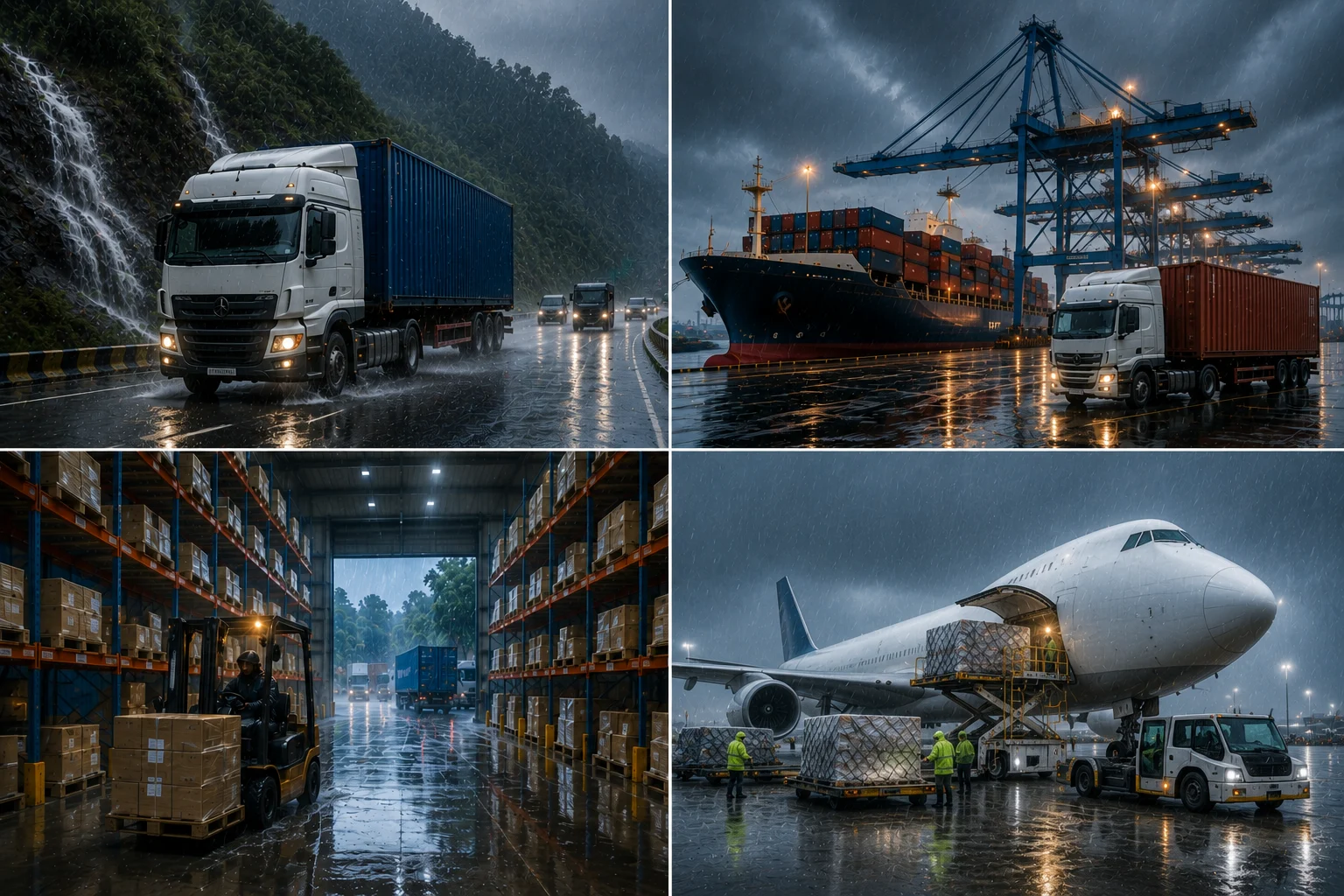
Key factors that make this season difficult for logistics operators include:
Waterlogged and Damaged Roads
Heavy rain may cause damage highways, create waterlogging situations, and in severe cases, complete road washouts.
Port and Rail Congestion
Major ports like Mumbai, Chennai, and Kolkata often experience slower vessel turnaround times, while rail lines in low-lying areas can face temporary suspensions.
Warehouse and Inventory Risk
Poorly protected storage facilities are vulnerable to water damage, especially for moisture-sensitive goods like electronics, textiles, and pharmaceuticals.
Last-Mile Delivery Delays
Urban flooding in metros such as Pune, Hyderabad, Mumbai, Bengaluru, and Chennai can bring last-mile delivery to a standstill for hours or days.
Driver and Fleet Safety
Heavy rains increase the risk of accidents and vehicle breakdowns, requiring extra caution and contingency planning.
Understanding these risk points is the first step toward building a monsoon-resilient supply chain — and it's where a logistics partner with real regional expertise, like Schramm Logistics, makes a measurable difference.
The Business Cost of Ignoring Monsoon Disruptions
Companies that treat the monsoon as an unpredictable inconvenience rather than a plannable variable often pay for it in missed delivery windows, spoiled inventory, and strained customer relationships. E-commerce businesses see spikes in delivery complaints. Manufacturers face raw material shortages when inbound shipments stall.
This is precisely why proactive Monsoon Logistics in India planning has become a competitive differentiator, not just a defensive measure.
Strategies to Keep Your Supply Chain Moving This Monsoon
1. Build Route Flexibility into Your Network
Static, single-route transportation plans are the first thing to break down during monsoon season. Effective Monsoon Logistics in India relies on dynamic route planning that can shift shipments away from flood-prone corridors in real time. At Schramm Logistics, our transportation planners maintain alternate route mapping for high-risk zones, allowing us to reroute shipments before delays cascade through the network — not after.
2. Diversify Warehousing and Buffer Stock Strategically
Rather than concentrating inventory in a single regional hub, businesses should consider distributing stock across multiple warehousing locations situated outside flood-prone zones. Maintaining a modest buffer stock of critical SKUs near demand centers can absorb short-term disruptions without triggering stockouts. Schramm Logistics works with clients to identify warehousing locations with strong flood-mitigation infrastructure, including elevated flooring, adequate drainage, and weatherproof storage for sensitive goods.
3. Strengthen Real-Time Visibility and Tracking
One of the most valuable tools in monsoon logistics is not physical — it's informational. Real-time shipment tracking, combined with weather and traffic data integration, allows logistics teams to anticipate delays before they happen rather than reacting after a shipment goes dark. Schramm Logistics equips clients with end-to-end shipment visibility, so businesses always know where their goods are and can communicate accurate timelines to their own customers.
4. Weatherproof Packaging for Sensitive Goods
Products vulnerable to moisture — electronics, garments, pharmaceuticals, packaged food — require an extra layer of protection during monsoon months. This includes waterproof outer packaging, moisture-absorbing materials inside cartons, and sealed pallet wrapping for goods stored or transported in open-air conditions. A small investment in weatherproof packaging can prevent significant losses in damaged inventory.
5. Plan for Extended Lead Times
Rather than promising delivery windows based on dry-season averages, businesses should build monsoon-adjusted lead times into customer communications from June through September. Transparent communication about potential delays, backed by reliable tracking, tends to preserve customer trust far better than missed delivery promises.
6. Partner With a Logistics Provider That Understands Regional Risk
Perhaps the most important strategy is choosing a logistics partner with deep, on-the-ground experience navigating India's monsoon geography. National weather patterns are only part of the picture — local knowledge of which roads flood first, which routes stay operational, and which regional carriers have the strongest monsoon track record is what separates a resilient supply chain from a vulnerable one.
How Schramm Logistics Supports Monsoon-Ready Supply Chains
At Schramm Logistics, monsoon preparedness is built into our operational planning well before the first rains arrive. Our approach includes:
- Pre-monsoon risk assessments across our transportation network, identifying high-risk routes and warehousing locations for each client's specific shipping lanes.
- Dynamic rerouting capabilities backed by real-time weather and traffic monitoring to minimize delays before they compound.
- Weatherproof warehousing options with proper drainage, elevation, and moisture control for sensitive inventory.
- Proactive client communication, enabling businesses to set realistic expectations with their customers during high-risk periods.
- A vetted regional carrier network with proven performance records during past monsoon seasons across Indian states.
We believe that resilient Monsoon Logistics in India isn't about eliminating disruption entirely — it's about building a supply chain that can absorb, adapt, and recover quickly when conditions turn difficult.
Preparing Today for a Smoother Monsoon Season
The businesses that fare best during India's monsoon season are the ones that start preparing before the rains begin — reviewing warehousing locations, stress-testing delivery routes, and aligning with a logistics partner who treats monsoon planning as a core operational discipline rather than an afterthought.
If your business is looking to strengthen its Monsoon Logistics in India strategy, Schramm Logistics is ready to help you build a supply chain that keeps moving, rain or shine.
Get in touch with Schramm Logistics today to build a monsoon-ready logistics plan tailored to your business.
Schramm Logistics is not just your freight forwarder but it's your Worldwide Delivery Partner
श्रम लॉजिस्टिक्स "विश्वव्यापी वितरण साथी"