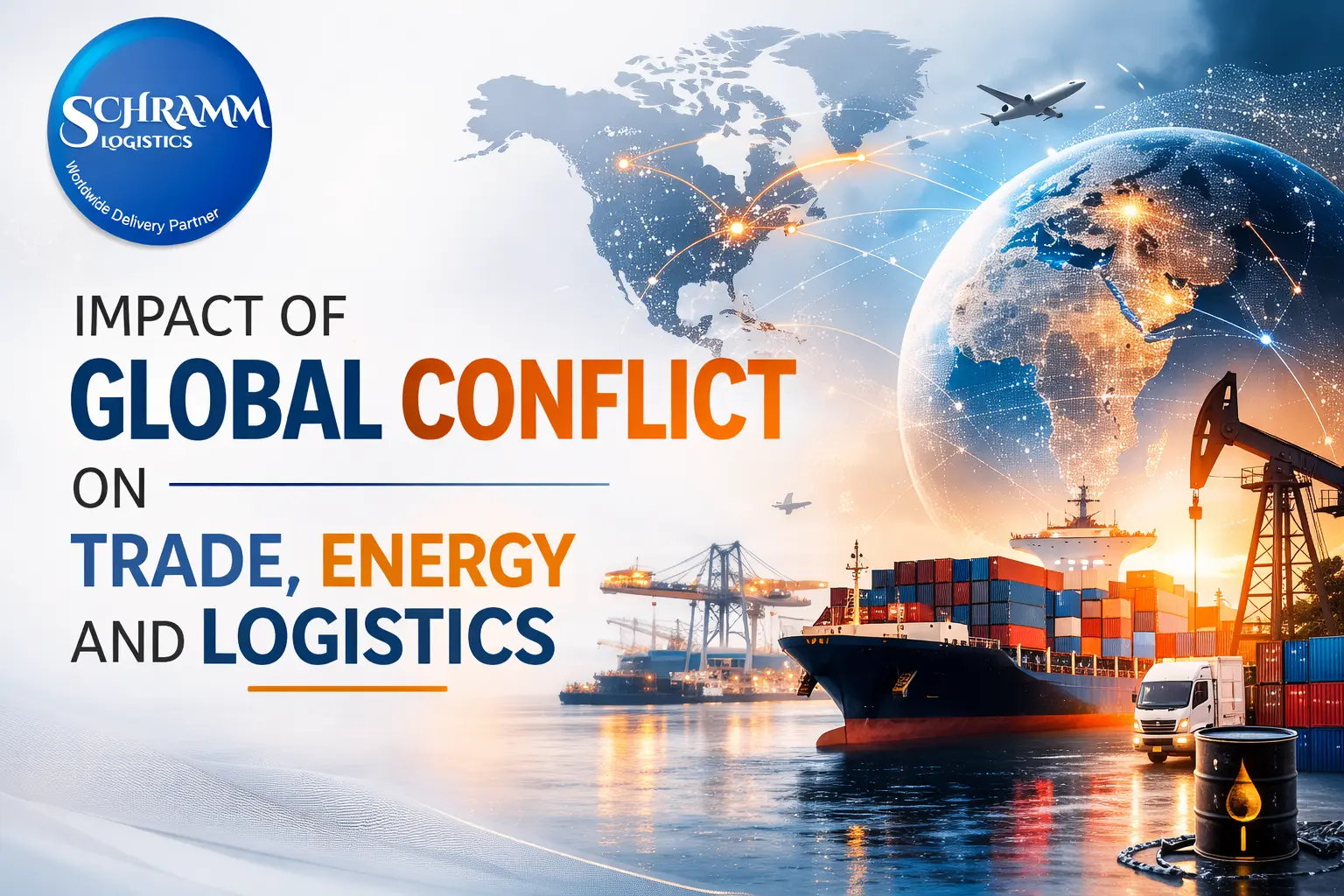
Impact of Global Conflict on Trade, Energy and Logistics
Impact of Global Conflict on Trade, Energy and Logistics
This note is not intended to take sides in any geopolitical conflict, nor to debate its purpose, strategy, or justification. Once a war begins, such discussions often become secondary. What remains important is understanding the economic impact of the conflict and preparing for the future. This analysis focuses on the broader economic and logistics implications of the ongoing global tensions.
Impact on Energy Supply
One of the most immediate and visible effects of global conflict is on oil and LNG prices. The reason is straightforward. The Strait of Hormuz, a critical global energy corridor, carries nearly 26% of the world’s oil trade and almost 80% of the oil supplied to Asia. Any instability in this region directly affects global energy markets.
LNG supply chains are also highly sensitive to geopolitical disruptions. Governments may prioritize domestic consumption over industrial usage, especially for essential resources such as household cooking gas. However, such emergency prioritization cannot be sustained indefinitely, which creates uncertainty for energy-dependent industries.
Short term impact
In the immediate term, several economic disruptions are expected:
- Sharp increase in oil and LNG prices
- Production slowdown in industries dependent on LNG
- Temporary job losses and workforce disruptions
- Increased need for shared logistics infrastructure
- Supply chain stress due to transportation and route uncertainties
These factors combine to create economic pressure across multiple industries.
Long term fallout
- Industry will accelerate search for alternate energy sources
- Bio-LNG, Bio-CNG, Green Hydrogen will emerge as even more favourable alternatives
- Investment in such renewable energy infrastructure and systems will likely increase significantly in the coming years.
- Need for Trusted Delivery Partner who can facilitate deep sharing of logistic infrastructure
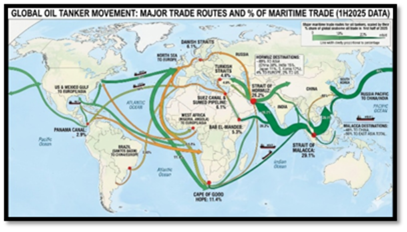
Impact on Global Trade Routes
Trade rout importance from below diagram is quite evident More than 50% of international trade flows through or near these strategic corridors, making them vulnerable to disruptions. However, shipping lines alone cannot decide whether to operate in these regions. Insurance and re-insurance companies play a decisive role. When war risk premiums increase dramatically, shipping through these areas can become commercially unviable.
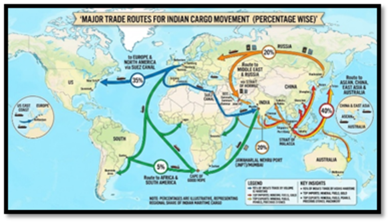
Current estimates
- Around 40,000 – 50,000 containers stranded in transit
- Cargo value estimated at $1 – $1.5 billion
- Significant losses in perishable goods, especially agricultural produce
- March, typically a peak export month for India, severely impacted
- Increase in freight costs due to fuel price rises and war risk premiums
These numbers are approximate but widely acknowledged within the logistics industry.
Long term fallout
Value Addition before Export- Perishable exports will move toward processed or value-added products. For example, instead of exporting raw tomatoes, exporters may increasingly ship – tomato ketchup, dried tomato powder to increase shelf life, retail packaging, white labelling etc
Export-oriented food processing industries will expand in Tier-2 cities and towns, creating new economic hubs.
Diversification in supply chains for both raw materials and export of the goods to minimise region specific dependencies.
Better Shipment Planning Industries may shift from concentrating exports in a few months to more evenly distributed shipments across the year.
India has the potential to emerge as a reliable exporter of engineering cargo, project cargo, and defence infrastructure.
Periods of uncertainty often create the best opportunities for learning and improvement. In the future, a logistics partner will not simply execute shipments. Instead, they must become a strategic part of the supply chain ecosystem. A capable logistics partner should help businesses:
- Optimize total supply chain cost
- Identify alternative routes and solutions
- Improve supply chain resilience
- Support long-term strategic planning
Focusing only on negotiating the lowest cost per shipment may sometimes overlook larger strategic advantages.
At Schramm Logistics we keep this world-wide delivery partner approach. We continuously innovate, stay updated with global trade developments, and share this knowledge with our clients so they can make informed decisions. Our role goes beyond freight forwarding. We help customers explore alternative logistics strategies, optimize supply chain costs, and navigate global uncertainties. Whenever possible, we pass on cost advantages and operational benefits to our clients because we believe in long-term partnerships, not transactional relationships.
Schramm Logistics is not just your freight forwarder but it’s your Worldwide Delivery Partner
श्रम लॉजिस्टिक्स “विश्वव्यापी वितरण साथी”