Why a Freight Forwarder in India as a Logistics Partner Matters for Every Exporter and Importer – Part II
Freight Forwarder in India
In Part I, we discussed how a Freight Forwarder in India helps structure international shipments through coordination, carrier management, and mode selection. In this section, we’ll focus on the risks that cost exporters and importers money — and how the right logistics partner helps prevent them.
Customs and Compliance Mistakes Create Delays That Customers Remember
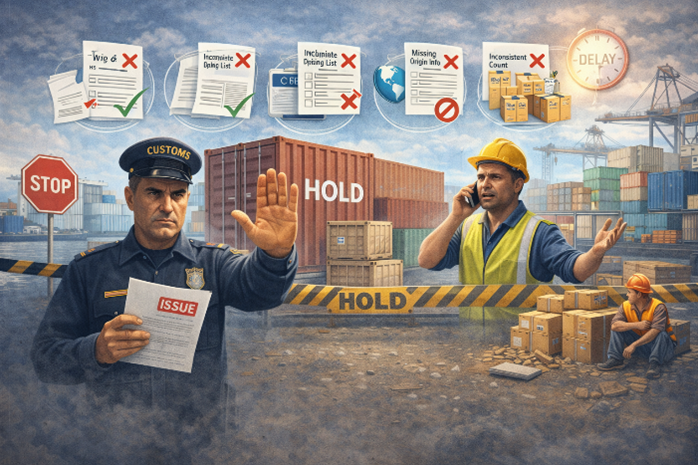
Customs problems don’t always come from “big” violations. Many delays start with small mismatches that trigger questions: a vague product description, an incomplete packing list, or weights that don’t match the bill of lading.
Common failure points include:
- • Wrong HS code selection, which can cause holds or duty disputes
- • Missing country-of-origin data, especially when components come from several places
- • Inconsistent piece counts between packing list and physical cargo
- • Unclear descriptions like “machine parts,” which invite inspections
- • Export controls that apply to certain industrial items, materials, or specs
The business impact is real: holds at the terminal, storage charges, demurrage, and missed installation windows where crews and cranes were booked weeks in advance.
A good forwarder helps coordinate compliance by flagging issues and aligning documents, but the shipper still needs to provide accurate product data. Think of it like quality control; the forwarder can catch defects, but they can’t guess the spec sheet.
Damage, Loss, and Surprise Charges Are Usually Planning Problems
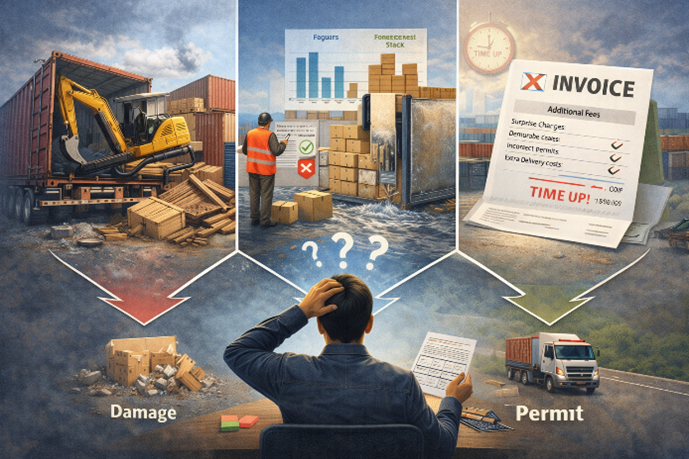
Most cargo damage doesn’t happen because someone “dropped” a machine. It happens because the plan didn’t match the real handling conditions. Industrial cargo gets tilted, stacked near other freight, exposed to moisture, or handled multiple times during transhipment.
Forwarders reduce that risk by pushing for practical protections: correct container selection, clear handling notes, and proper blocking and bracing for heavy items. For crated equipment, they’ll often confirm lifting points, fork access, and whether the packing can handle side loads.
Insurance also matters, and it’s often misunderstood. Carrier liability is limited and can be hard to collect. Cargo insurance is worth serious consideration for high-value parts, long transit routes, or shipments with many handoffs.
Surprise charges follow the same pattern. They tend to appear when roles and timing aren’t clear. A quick “sanity check” before shipping can prevent many of them:
- • Confirm free time and who pays detention and demurrage
- • Verify pickup and delivery appointments, especially at plants with narrow windows
- • Ask about port congestion, chassis availability, and re-delivery fees
- • Make sure accessorial (wait time, special handling, oversize permits) are discussed early
How to Pick a Freight Forwarder You Can Trust for Industrial Shipments
Choosing a forwarder isn’t only about coverage or rates. It’s about whether they can run your shipment like a controlled job, with planning, documentation discipline, and clear communication when conditions change.
Start by looking for fit, then test for execution.
Ask for Proof: Experience with Heavy, Oversized, and Time-Critical Cargo
Industrial freight has edge cases that standard playbooks don’t cover. Oversized equipment may require flat racks or open-top containers. Heavy lifts may need engineered rigging plans. Some plants need delivery within a narrow slot because the crane is rented for one day.
Ask for examples that match your world: similar weight, similar dimensions, similar lanes, and similar delivery constraints. Listen for specifics, not broad claims.
If your shipments involve out-of-gauge moves, multi-leg coordination, or jobsite deliveries, prioritize teams that handle complex moves as a core service, like Project Logistics management services. Complex freight needs planning depth, not just capacity.
Set Expectations Early with Clear Roles, Tracking, and Escalation
Even great operators run into weather, rolled sailings, port bunching, and customs questions. What matters is how fast you find out and what happens next.
Agree on basics before the first booking: a named point of contact, milestone-based updates, and exception alerts that arrive early enough to act. It also helps to define simple KPIs such as on-time pickup, document accuracy, and dwell time at key handoffs.
Finally, confirm Incoterms responsibilities in plain language. Who files export clearance? Who pays destination charges? Who is the importer of record? Many disputes and “unexpected” invoices come from assumptions, not bad intent.
Conclusion
A freight forwarder who acts like a true partner gives manufacturers more than transport. They provide control across carriers, paperwork, and handoffs — protecting timelines and customer commitments.
At Schramm Logistics, we apply this partner-first approach to every shipment. As a trusted Freight Forwarder in India, we support exporters and importers with structured planning, disciplined documentation, and proactive coordination across ports and carriers.
The right logistics partner doesn’t just move freight — they strengthen your supply chain.